

3 Key Takeaways
-
Storm damage often starts subtly, and early warning signs—inside and outside the home—indicate when emergency roof tarping is urgently needed.
-
Professional inspection, documentation, and tarping provide far more reliable temporary protection than DIY methods, especially in severe weather conditions.
-
Quick action prevents small leaks from escalating into major structural damage, saving homeowners from costly repairs and safety risks.
Storm damage and aging can turn a protective roof into a serious threat to your home’s safety. When shingles fail, leaks become inevitable, leading to extensive interior damage that far exceeds the cost of immediate roof protection.
Shingle roof damage rarely announces itself with obvious signs. Missing shingles, exposed underlayment, and compromised flashing create entry points for moisture that can destroy insulation, drywall, and personal belongings within hours of a storm. However, exterior damage tells only part of the story.
Interior warning signs often provide the first indication that temporary roof protection becomes necessary. Water stains spreading across ceilings, mysterious dripping sounds during rainfall, and discoloration around light fixtures signal that roofing materials have already been compromised. These symptoms indicate that assessing roof damage should happen immediately, before the next weather event causes additional destruction.
Understanding when emergency tarping becomes essential protects both the structural integrity of your home and your family’s safety. Quick action prevents minor roofing problems from escalating into a major reconstruction project.
Understanding When Storm Damage Requires Immediate Roof Protection
Identifying the signs of damage that would require an emergency roof tarp needs an assessment of both visible damage and subtle indicators that homeowners can safely evaluate. Post-storm inspections should focus on missing or damaged shingles, exposed nail heads, and granule accumulation in gutters that signal deteriorating roof materials. Ground-level observation can reveal curled shingle edges, cracked or split materials, and areas where flashing has separated from roofing components.
Assessing roof damage involves checking for things like:
- Hail impact marks, which appear as dark spots or circular indentations on shingle surfaces.
- Debris impact, which leaves obvious punctures or gouges that compromise the protective barrier.
These issues need to be immediately addressed to avoid water damage in your home.
Oklahoma’s high winds during can be a significant issue when attempting to tarp your roof in an emergency. Storms with tornado-speed winds often strip large sections of roofing material, while intense thunderstorms drive wind-blown debris through vulnerable areas.
Professional leak prevention methods become essential when multiple indications of damage appear at the same time or when interior signs like water stains or dripping how up when the exterior damage does.
How to Safely Assess Your Roof Damage from the Ground
Professional assessment of roof damage begins with a ground-level inspection. Using high-quality binoculars, homeowners can identify if emergency roof tarping is necessary for them. Position binoculars to examine roof sections methodically, starting from one corner and working systematically across the entire surface to avoid missing important areas that may have been damaged.
Visual assessment methods should focus on specific indicators that signal immediate concern. Look for missing or displaced shingles, exposed underlayment, damaged flashing around chimneys and vents, and accumulated debris that may have punctured roofing materials. Granule loss appears as dark spots on asphalt shingles, while cracked or curled edges indicate aging materials vulnerable to wind uplift and water getting underneath.
Documentation for insurance claims requires photographic evidence captured before installing temporary roof protection. Take wide-angle shots showing the overall damage, zoom in to document specific damaged areas. Include reference points like gutters, chimneys, or roof edges in each photograph to establish the scale and location of the damage for an accurate claim.
Emergency Situations That Require Immediate Tarping
Certain roofing emergencies need immediate intervention to prevent catastrophic damage to your home’s interior and structural components. Active leaks represent the most critical scenario requiring an emergency roof tarp. When water actively drips through ceiling fixtures, pools on floors, or creates spreading stains during rainfall, the protective barrier has failed.
Structural compromise indicators create equally urgent tarping needs that cannot wait for permanent repairs. Sagging roof sections could be a sign that the load-bearing beams of your roof have failed, while large holes from fallen trees or debris create massive exposure points. Multiple shingle loss across significant roof areas leaves the underlayment vulnerable to puncture and tearing.
Ice dam formations during winter create unique emergency scenarios where melting and refreezing cycles force water under intact shingles. This often appears in unexpected interior locations, making the identification of its source difficult. Professional prevention methods become essential when interior damage appears without an obvious exterior cause.
Assessing roof damage severity determines whether emergency tarping provides adequate protection or if more extensive temporary measures become necessary. Quick response to these critical situations prevents minor emergencies from escalating into major reconstruction projects that affect your home’s habitability and safety.
Temporary Protection Methods and Their Effectiveness
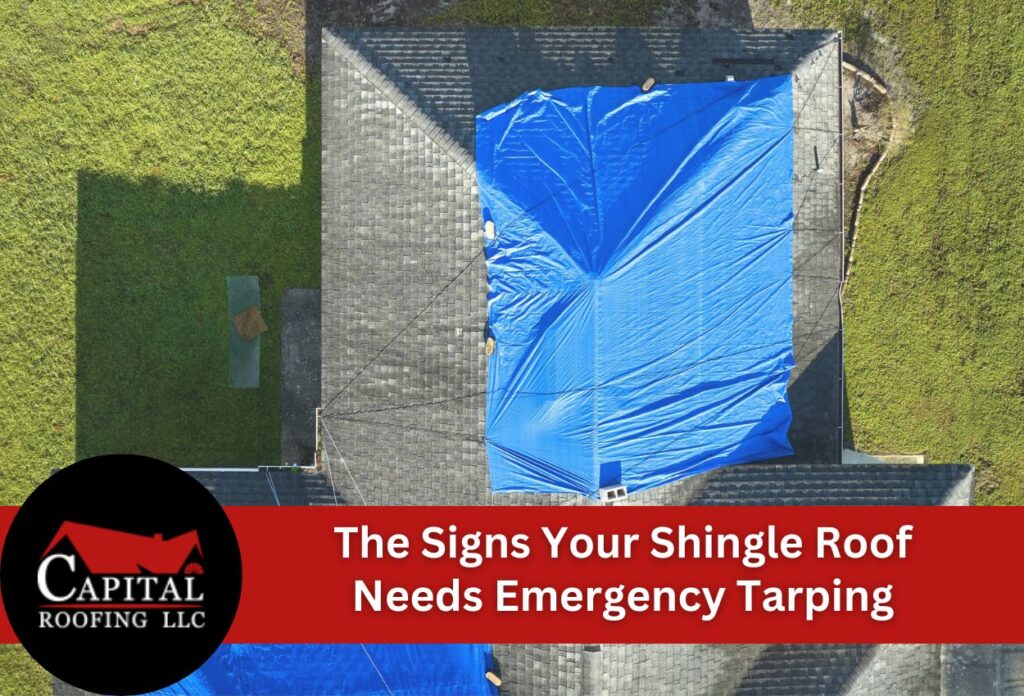
Professional tarping systems provide superior temporary roof protection compared to hardware store materials and amateur installation techniques. Heavy-duty vinyl tarps with reinforced edges and professional-grade fastening systems create watertight barriers that withstand Oklahoma’s severe weather conditions. These specialized materials resist tearing and UV degradation that quickly destroys standard blue tarps commonly used in DIY attempts.
Installation determines whether temporary roof protection remains effective throughout extended repair periods. Professional contractors secure tarping materials using proper overlap patterns, strategic anchor point placement, and wind-resistant fastening systems that prevent water channeling under protective barriers.
DIY tarping attempts frequently fail due to inadequate materials, improper installation, and insufficient securing methods. Homeowners often underestimate some of the key factors that go into an effective temporary protection system. Improperly installed tarps can actually make the damage worse by collecting water in pooling areas or creating new entry points where inadequate fastening allows material separation.
Professional installation avoids additional damage to the roof by incorporating proper drainage slopes and secure attachment methods that complement the existing roof. Expert contractors understand how different roofing materials interact with temporary protection systems, ensuring compatibility that prevents additional damage during installation or removal processes.
Preventing Further Damage With A Quick Response
Time becomes the determining factor between manageable roof repairs and extensive structural reconstruction when shingles fail. Emergency roof tarping signs require immediate attention because water damage accelerates exponentially once protective barriers become compromised. Within hours of the initial leak, moisture begins saturating insulation materials, creating conditions for mold growth and structural deterioration.
Professional installation of temporary roof protection typically occurs within 24 to 48 hours of the damage happening, depending on weather conditions and material availability. This rapid response prevents water from reaching interior spaces where damage spreads quickly through ceiling materials, walls, and flooring systems. Delayed action allows moisture to get deeper into building materials, creating repairs that require complete replacement rather than surface restoration.
Strategic tarp placement considers drainage patterns that direct water away from vulnerable areas while protecting interior spaces during extended repair periods. Proper installation creates positive drainage slopes that channel water toward gutters and away from structural gaps like chimneys, vents, and skylights. Professional contractors understand how different roof angles and architectural features affect water flow patterns.
Working with Professional Roofers for Emergency Tarping Services
Professional roofing contractors specializing in emergency response provide systematic approaches to temporary roof protection that exceed basic tarp installation. When emergency roof tarping signs indicate immediate intervention needs, qualified professionals typically respond within 4 to 8 hours during normal weather conditions. Their assessment procedures include comprehensive damage documentation, structural safety evaluation, and strategic protection planning that addresses both immediate leaks and long-term repair requirements.
Emergency roofing contractors arrive equipped with commercial-grade materials and specialized installation tools designed for rapid deployment. Professional installation procedures ensure that temporary roof protection systems integrate properly with existing structures while maintaining drainage patterns that prevent water accumulation.
Material selection for permanent repairs often begins during emergency tarping installation. This early assessment allows homeowners to coordinate insurance approvals and material orders while temporary systems protect your home, streamlining the transition from emergency response to roof restoration.
Act Now to Protect Your Home with Capital Roofing
If you’re noticing any of the warning signs discussed, such as missing shingles, water stains, or hearing dripping sounds within your home, it’s important to act quickly to prevent further damage. These indicators suggest that your shingle roof may need emergency tarping to shield your home from ongoing weather threats and potential structural harm. Waiting could lead to more expensive repairs.
Don’t hesitate to secure your home against further damage. Call Capital Roofing now at (918) 260-4075 for a professional assessment and immediate tarping services. Our expert team is ready to provide fast and reliable solutions to keep your home safe and dry.